
Foreign banking major HSBC said on Thursday that it will decide on hiking its 14.6 per cent stake in UTI Bank after the government comes up with a policy on foreign direct investment and voting rights.

Equity markets this week would keenly track the upcoming GST Council meeting, macroeconomic data announcements and trading activity of foreign investors for further movement, analysts said. Moreover, developments related to tariff negotiations, global market trends and auto sales data would also drive investors' sentiment.

Titan, Nestle, Hindustan Unilever, State Bank of India, Larsen & Toubro, ITC, Zomato and Bajaj Finserv were also among the laggards. Adani Ports, IndusInd Bank, Tata Motors and HDFC Bank were among the major gainers.

India's services sector growth eased slightly in April but growth of new business and output remained sharp and among the fastest in 14 years amid favourable economic conditions and strong demand, a monthly survey said on Monday. The seasonally adjusted HSBC India Services Business Activity Index fell from 61.2 in March to 60.8 in April, highlighting one of the strongest growth rates seen in just under 14 years. Survey members attributed the latest upturn in output to favourable economic conditions, demand strength and rising intakes of new work.

The US Trade Representative noted that India's average applied tariff rate stood at 17% per cent, the highest of any major world economy.

The November 5 US presidential elections, Federal Reserve interest rate decision, trading activity of foreign investors, and the upcoming quarterly earnings from domestic firms are the major triggers that would influence sentiments in the equity market this week, analysts said. In an eventful week ahead, a host of macroeconomic data announcements and global trends would also drive the markets, experts said. "The upcoming week is poised to be eventful on the global front.
Stuard Milne, CEO, HSBC India talks about the bank's gameplan in the country.
A figure above 50 indicates that the sector is expanding, while a figure below that level means contraction.

Neo banks, along with mid-sized banks, are establishing global capability centres (GCCs) in India, mirroring the expansion strategies of larger global counterparts. This trend is being seen as the next major wave in the country's banking, financial services, and insurance (BFSI) sector.

Amid decelerating economic growth and falling industrial output, India's services sector has shown signs of promise in May recording the fastest pace of growth in the past three months, says an HSBC survey.

British banking major HSBC on Thursday announced a consolidation exercise under which it will almost halve the number of branches in the country to 26, which will lead to 300 job losses.
Equity markets this week will turn their focus on the RBI's interest rate decision, Q1 earnings from several blue-chip firms and tariff-related news for further cues, analysts said. Moreover, trading activity of foreign investors and trends in global equity markets will also drive investors' sentiment.
Naina Lal Kidwai, group general manager and country head for HSBC India, does not seem to be too perturbed about the slowdown or the rising delinquency levels.

Though fiscal deficit is a concern, the country needed spending to boost the economy hit by financial crisis, she said. Going by the bank's research, Kidwai said India is likely to grow at 8 per cent in next fiscal 2010-11.

Among the Sensex firms, JSW Steel, Tata Steel, Tech Mahindra, Infosys, Wipro, Tata Consultancy Services, Nestle, HCL Technologies, HDFC Bank and Maruti were the major laggards. IndusInd Bank, ITC, Bharti Airtel and State Bank of India were among the winners.

From the 30 Sensex firms, IndusInd Bank, Asian Paints, Hindustan Unilever, Tata Motors, Tata Steel, Titan, Reliance Industries and NTPC were among the major laggards. Tech Mahindra, Mahindra & Mahindra, Kotak Mahindra Bank, Infosys, HCL Technologies and State Bank of India were among the major gainers.
Stock markets are in for an event-heavy week ahead with a raft of Q1 earnings from blue-chips, the US Fed interest rate decision and foreign investors trading activity driving investors' sentiment, analysts said. Macroeconomic data announcements, monthly auto sales numbers and global market trends would also guide movement in the domestic equities, they said.
HSBC on Thursday said the Indian economy, which is projected to grow at 5.7 per cent this fiscal, is likely to grow at a faster pace next fiscal at 6.9 per centfollowing the recent spate of policy reforms.
Mumbai, the financial capital of India, has emerged as the most risk-averse city, according to a survey, conducted by HSBC India.

The headline HSBC India Purchasing Managers' Index -- a composite gauge designed to give a single-figure snapshot of manufacturing business conditions -- stood at 53.3 in November significantly higher from 51.6 in October.

With India's EV penetration at just 2.5 per cent, the market presents an opportunity -- provided Tesla gets its pricing right.

Domestic macroeconomic data announcements, global trends and trading activity of foreign investors would guide market sentiments this week, analysts said. After a record rally, markets may face volatile trends this week amid elevated valuations and investors would also keep a track of global oil benchmark Brent crude and rupee-dollar movement for further cues. "Potential volatility in the stock market is anticipated this week. Elevated valuations remain a concern, with investors now focusing on monsoon progress and its impact on the rural economy.

The US Fed interest rate decision, trading activity of foreign investors and quarterly earnings from corporates would largely drive the momentum in the equity market this week, analysts said. Escalating tensions between India and Pakistan over the Pahalgam terror attack will also remain on investors' radar, they added.

The HSBC/Markit purchasing managers index for the services industry inched up to 47.1 in October from 44.6 in September, the fourth successive monthly contraction of service sector output across India.

The HSBC/Markit Purchasing Managers Index for the services industry inched up to 47.2 in November from 47.1 in October, the fifth sub-50.0 reading and indicated an output contraction across the Indian service economy.
The government's capex spend is expected to rise and much of this is likely to be focussed on rural India, particularly for housing, roads and irrigation.

According to the report, the demand for materials needed for infrastructure projects like metals, minerals, buildings and transport equipment is expected to increase as the country invests in building its civil infrastructure.
Strong new business growth was the primary factor.

The HSBC/Markit Purchasing Managers Index for the services industry fell to 46.7 in December from 47.2 in November, registering the sixth consecutive monthly drop in output levels, the longest period of continuous reduction since the 2008/2009 global financial crisis.

On price rise, HSBC said that the rate of cost inflation decelerated sharply while output prices were unchanged.
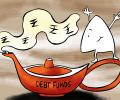
With the interest rate cut cycle nearing its end, several debt fund managers are shifting their focus towards interest income rather than betting on duration in anticipation of capital gains.

According to official figures, retail inflation in June touched its lowest mark at 7.31 per cent since January 2012.
Probe found that HSBC's Anti-Money Laundering Compliance Department was highly inadequately staffed.

HSBC Holdings Plc will shut its private banking business in India, a spokesman said

The HSBC India Composite Output Index, which maps both services and manufacturing activity, fell to 48.4 in July, down from 50.9 in June, indicating an overall contraction.
The entire HSBC list features names of 1,668 Indians

The government expects the economy to grow by 7-7.75 per cent in the current fiscal.
